
Hyundai Ioniq (AE): Hybrid System Overview / HEV (Hybrid Electric Vehicle) System
Hybrid Vehicle
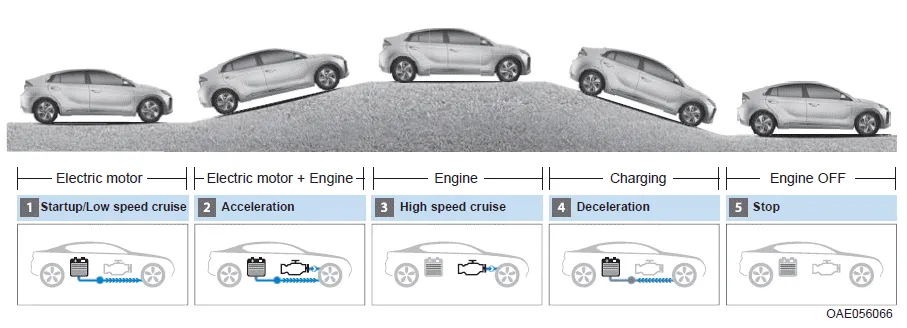
The HYUNDAI Hybrid Electric Vehicle (HEV) uses both the gasoline engine and the electric motor for power. The electric motor is run by a high-voltage HEV battery.
Depending on the driving conditions, the HEV computer selectively operates between the engine and the electric motor or even both at the same time.
Fuel efficiency increases when the engine is off at idle, or when the vehicle is driven by the electric motor with the HEV battery.
The HEV battery charge must be maintained, so at times the engine will come on even at idle to act as a generator. Charging also occurs when decelerating or by regenerative braking.
Plug-in Hybrid Vehicle The HYUNDAI Plug-in Hybrid Electric Vehicle (PHEV) shares the characteristics of both a conventional hybrid electric vehicle and an all-electric vehicle.
Categories
- Manuals Home
- Hyundai Ioniq Owners Manual
- Hyundai Ioniq Service Manual
- Transmission Gear Oil. Repair procedures
- Brake System
- Repair procedures
- New on site
- Most important about car
