
Hyundai Ioniq (AE): Engine Control System / Engine Coolant Temperature Sensor (ECTS). Description and operation
| Description |
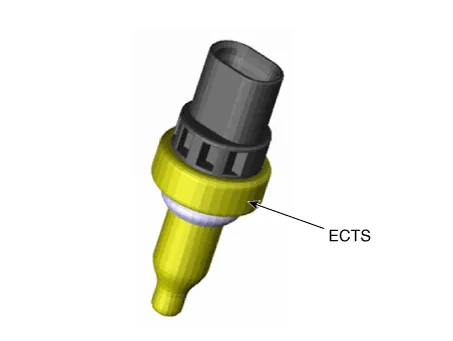
Inspection1.Turn the ignition switch OFF.2.Disconnect the IATS connector.3.Measure resistance between the IATS terminals 3 and 4.4.Check that the resistance is within the specification.
Specification Temperature Resistance (kΩ) °C °F -40-4048.
Other information:
Hyundai Ioniq (AE) 2017-2022 Service & Repair Manual: A/C Pressure Transducer. Description and operation
DescriptionThe A/C Pressure Transducer (APT) converts the pressure value of high pressure line into voltage value after measuring it. By converted voltage value, engine ECU controls the cooling fan by operating it high speed or low speed. Engine ECU stops the operation of the compressor when the temperature of refrigerant line is very high or very
Hyundai Ioniq (AE) 2017-2022 Service & Repair Manual: High voltage shut-off procedures
High Voltage Shut-off Procedures • Be sure to read and follow the "General Safety Information and Caution" before doing any work related with the high voltage system. Failure to follow the safety instructions may result in serious electrical injuries.
Categories
- Manuals Home
- Hyundai Ioniq Owners Manual
- Hyundai Ioniq Service Manual
- Suspension System
- Engine Clutch System
- Engine Mechanical System
- New on site
- Most important about car
