
Hyundai Ioniq (AE): Brake System / Brake Line. Repair procedures
Hyundai Ioniq (AE) 2017-2022 Service & Repair Manual / Brake System / Brake System / Brake Line. Repair procedures
| Removal |
| 1. | Disconnect the brake fluid level switch connector, and remove the reservoir cap. |
| 2. | Remove the brake fluid from the master cylinder reservoir with a syringe.
|

| 3. | Remove the wheel & tire. |
| 4. | Remove the brake hose clip (A). |
| 5. | Disconnect the brake tube by loosening the tube flare nut (B).
[Front]
[Rear]
|
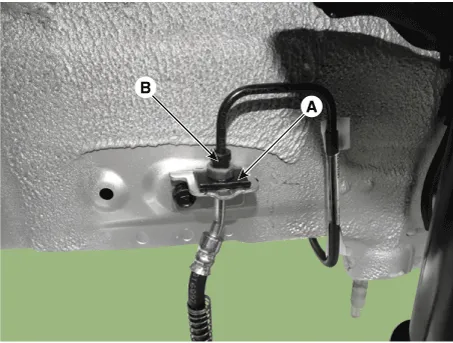
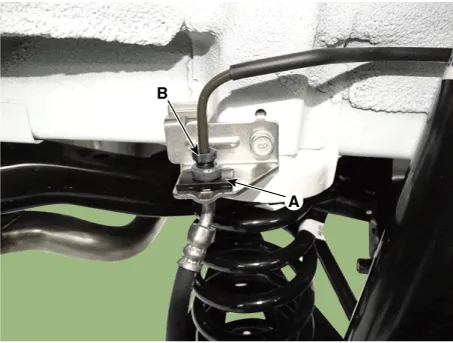
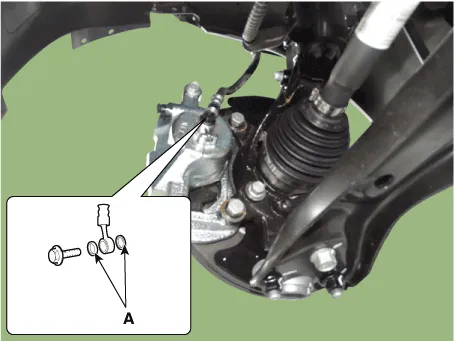
| 6. | Disconnect the brake hose from the brake caliper by loosening the bolt (A).
[Front]
[Rear]
|
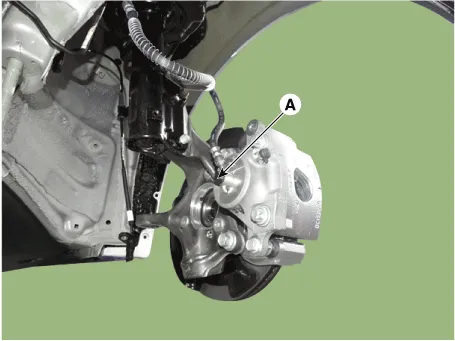
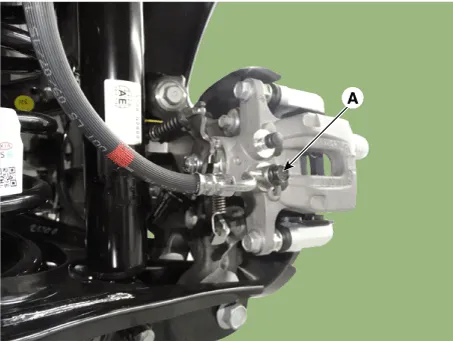
| Installation |
| 1. | To install, reverse the removal procedure.
|
| 2. | After installing, bleed the brake system. (Refer to Brake System - "Brake System Bleeding") |
| 3. | Check the spilled brake oil. |
Components 1. Brake pedal member assembly2. Stop lamp switch3. Brake pedal arm4. Brake pedal pad5. Brake pedal stroke sensor
Other information:
Hyundai Ioniq (AE) 2017-2022 Service & Repair Manual: PTC Heater. Repair procedures
InspectionOperating Logic Test (Manual only)Inspect the PTC operation by confirmation logic as follows.1.Entering(1)Set the Floor mode and maximum heating position.(2)Turn off the blower switch.(3)Press the intake (recirculation) button 5 times or more.
Hyundai Ioniq (AE) 2017-2022 Service & Repair Manual: Description and operation
DescriptionRear view monitor (RVM) will activate when the backup light is ON with the ignition switch ON and the shift lever in the R position.This system is a supplemental system that shows behind the vehicle through the AV monitor while backing-up. • This system is a supplementary function only.
Categories
- Manuals Home
- Hyundai Ioniq Owners Manual
- Hyundai Ioniq Service Manual
- Jump Starting
- Brake System
- Engine Mechanical System
- New on site
- Most important about car

Copyright © 2026 www.hioniqae.com - 0.0145