
Hyundai Ioniq (AE): High Voltage Battery Control System / Main Relay. Repair procedures
Hyundai Ioniq (AE) 2017-2022 Service & Repair Manual / Hybrid Control System / High Voltage Battery Control System / Main Relay. Repair procedures
| Removal |
|

| 1. | Shut off the high voltage. (Refer to Hybrid Control System - "High Voltage Shut-off Procedures") |
| 2. | Remove the rear seat cushion. (Refer to Body - "Rear Seat Assembly") |
| 3. | Remove the rear door scuff trim. (Refer to Body - "Door Scuff Trim") |
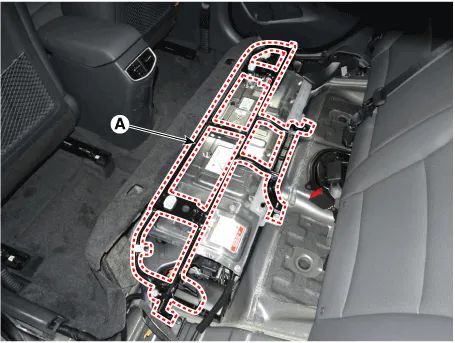
| 4. | Remove the upper frame (A) after loosening the mounting bolts and nuts.
|
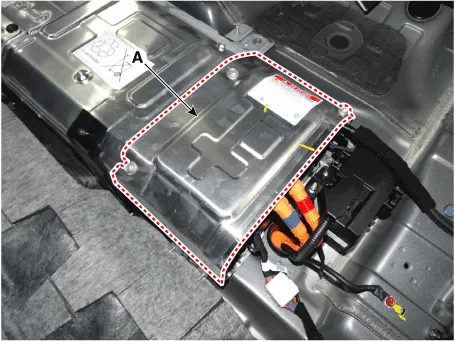
| 5. | Remove the high voltage battery rear cover (A) after loosening the mounting bolts and nuts.
|
| 6. | Remove the inlet cooling duct. (Refer to Hybrid Control System - "Cooling Duct") |
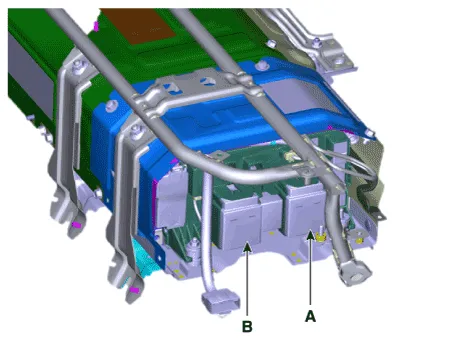
| 7. | Disconnect the main relay (+) (A), and main relay (-) (B).
|
| Installation |
|
| 1. | Install the main relay in the reverse order of removal.
|
| Inspection |
|
Checking for Welding in the High Voltage Main Relay
| [Using GDS service data to check for main relay weld damage] |
| 1. | Connect the GDS to the Data Link Connector (DLC). |
| 2. | Turn the ignition switch ON. |
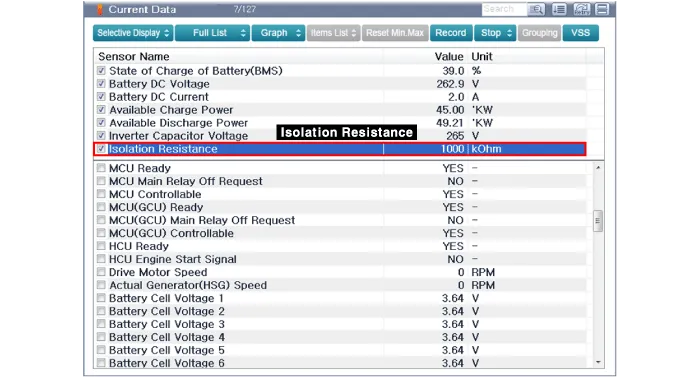
| 3. | Check the BMS weld damage state in the GDS service data.
|
| [Using a Multimeter to measure weld damage] |
| 1. | Shut off the high voltage. (Refer to Hybrid Control System - "High Voltage Shut-off Procedures") |
| 2. | Remove the high voltage battery rear cover. (Refer to High Voltage Battery System - "Case") |
| 3. | Remove the inlet cooling duct. (Refer to Hybrid Control System - "Cooling Duct") |
| 4. | Measure the high voltage main relay resistance and check for signs of weld damage.
|
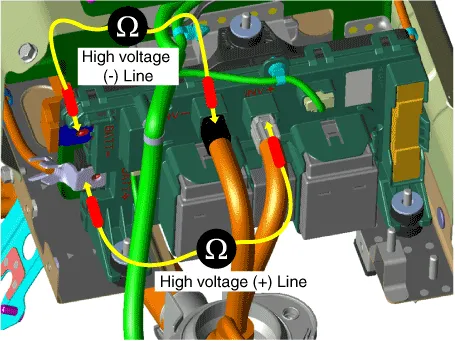
High voltage main relay (-) switch resistance
| 1. | Shut off the high voltage. (Refer to Hybrid Control System - "High Voltage Shut-off Procedures") |
| 2. | Remove the high voltage battery rear cover. (Refer to High Voltage Battery System - "Case") |
| 3. | Remove the inlet cooling duct. (Refer to Hybrid Control System - "Cooling Duct") |
| 4. | Measure the resistance between the high voltage power terminal (-) and the inverter power terminal (-).
|
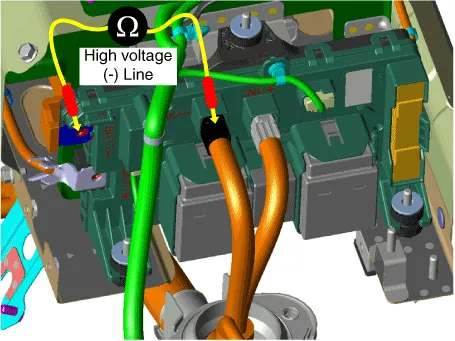
| [Circuit inspection (Relay ON)] |
|

| 1. | Connect the GDS to the Data Link Connector (DLC). |
| 2. | Turn the ignition switch ON. |
| 3. | Activate the main relay by using "Actuation Test" on the GDS as shown in the illustration below.
|
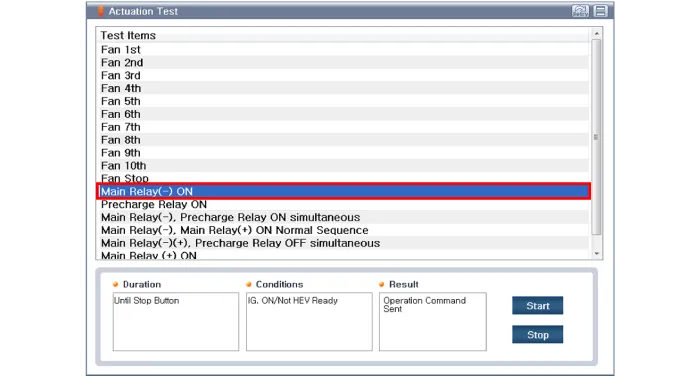
High Voltage Main Relay Coil Resistance
| 1. | Shut off the high voltage. (Refer to Hybrid Control System - "High Voltage Shut-off Procedures") |
| 2. | Remove the power relay assembly. (Refer to High Battery System - "Power Relay Assembly") |
| 3. | Check for continuity between the terminals using an ohmmeter.
|
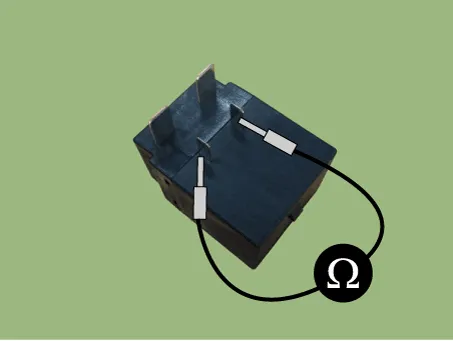
Circuit Diagram
DescriptionThe Power Relay Assembly (PRA) consists of the positive and negative main relays, pre-charge relay, pre-charge resistor and battery current sensor.
Other information:
Hyundai Ioniq (AE) 2017-2022 Service & Repair Manual: Repair procedures
Replacement1.Remove the battery (-) terminal.2.Remove the engine room under cover.(Refer to Engine Mechanical System - "Engine Room Under Cover")3.Remove the heater hose (A) and AEWP hose (B).4.Disconnect the lock pin to remove the heater hose pump connector (A).
Hyundai Ioniq (AE) 2017-2022 Service & Repair Manual: Blower Unit. Components and components location
Component Location1. Blower unit assembly Components1. Duct Seal2. Intake duct case3. Air intake door assembly4. Intake door5. Seal6. Intake duct case (A)7. Air filter cover (A)8. Intake actuator9. Air filter cover10. Air filter 11. Blower unit pad12.
Categories
- Manuals Home
- Hyundai Ioniq Owners Manual
- Hyundai Ioniq Service Manual
- Transmission Gear Oil. Repair procedures
- Engine Clutch System
- Suspension System
- New on site
- Most important about car

Copyright © 2026 www.hioniqae.com - 0.0184