
Hyundai Ioniq (AE): Cooling System / Water pump. Repair procedures
| Removal |
| 1. | Loosen the drain plug, and drain the engine coolant. Remove the reservoir cap to help drain the coolant faster. (Refer to Cooling System - "Coolant") |
| 2. | Remove the drive belt. (Refer to Timing System - "Drive Belt") |
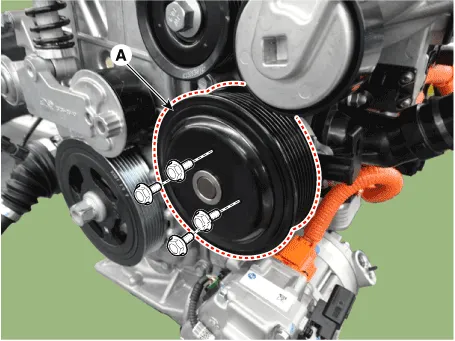
| 3. | Remove the water pump pulley (A).
|
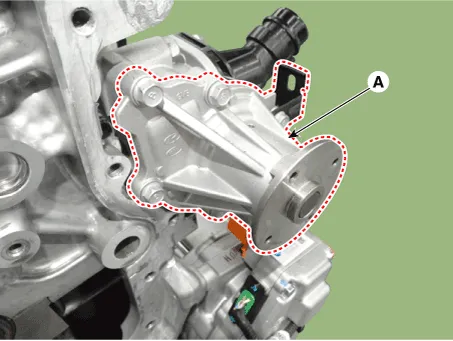
| 4. | Remove the water pump (A).
|
| Inspection |
| 1. | Check each part for cracks, damage or wear, and replace the water pump assembly if necessary. |
| 2. | Check the bearing for damage, abnormal noise and sluggish rotation, and replace the water pump assembly if necessary. |
| 3. | Check for coolant leakage. If coolant leaks from hole, the seal is defective. Replace the water pump assembly.
|

| Installation |
| 1. | Install the water pump (A) with the new gasket.
|
| 2. | Install the water pump pulley (A).
|
| 3. | Install the drive belt. (Refer to Timing System - "Drive Belt") |
| 4. | Fill the radiator with coolant and check for leaks. (Refer to Cooling System - "Coolant") |
| 5. | Start engine and check for leaks. |
| 6. | Recheck the coolant level. |
Components1. Water pump pulley2. Water pump3. Gasket
TroubleshootingWater Pump Symptoms Possible Causes Remedy Coolant leakage• From the bleed hole of the water pumpVisually check• Check leaks after about ten-minute warming up.
Other information:
Hyundai Ioniq (AE) 2017-2022 Service & Repair Manual: Photo Sensor. Description and operation
Description The photo sensor is located at the center of the defrost nozzles.The photo sensor contains a photovoltaic (sensitive to sunlight) diode. The solar radiation received by its light receiving portion, generates an electromotive force in proportion to the amount of radiation received which is transferred to the automatic temperature control
Hyundai Ioniq (AE) 2017-2022 Service & Repair Manual: Auto Defogging Sensor. Repair procedures
Diagnosis With GDS1.The heating, ventilation and air conditioning can be quickly diagnosed failed parts with vehicle diagnostic system (GDS).※ The diagnostic system (GDS) provides the following information.(1) Self diagnosis : Checking the failure code (DTC) and display.
Categories
- Manuals Home
- Hyundai Ioniq Owners Manual
- Hyundai Ioniq Service Manual
- Repair procedures
- Hybrid Control System
- Brake System
- New on site
- Most important about car
