
Hyundai Ioniq (AE): Fuel Delivery System / Fuel Line. Repair procedures
Hyundai Ioniq (AE) 2017-2022 Service & Repair Manual / Engine Control/Fuel System / Fuel Delivery System / Fuel Line. Repair procedures
| Removal |
| 1. | Release the residual pressure in fuel line. (Refer to Fuel Delivery System - "Release Residual Pressure in Fuel Line") |
| 2. | Turn the ignition switch OFF, and then remove battery (-) cable. |
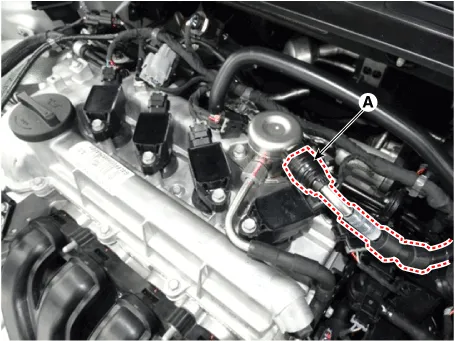
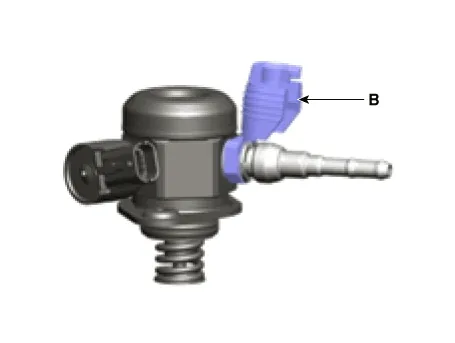
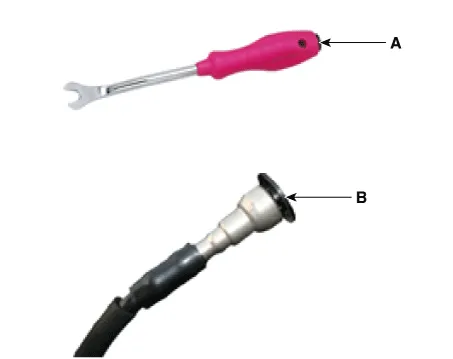
| 3. | Disconnect the fuel feed tube quick-connector (A).
|


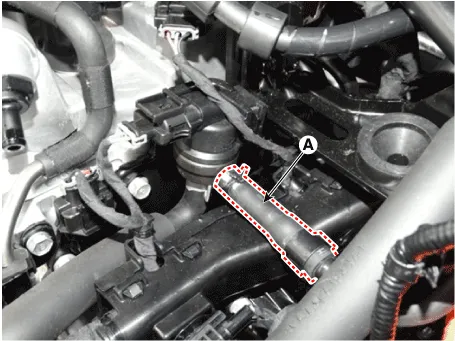
| 4. | Disconnect the vapor hose (A) which is connected from the PCSV.
|
| 5. | Remove the fuel tank. (Refer to Fuel Delivery System - "Fuel Tank") |
| 6. | Remove the front sub frame. (Refer to Suspension System - "Sub Frame") |
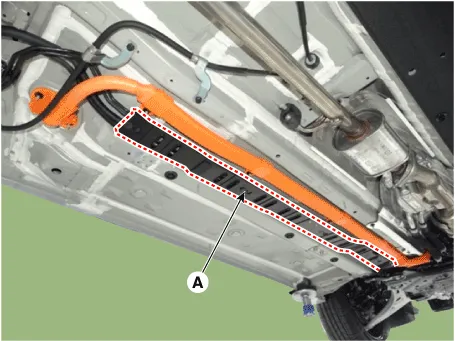
| 7. | Remove the fuel and brake line protector (A) after removing the fixing clip.
|
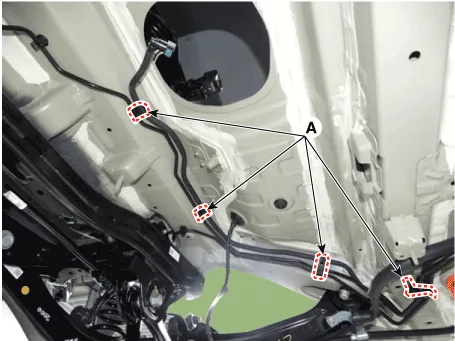
| 8. | Remove the fuel feed line fixing clip (A).
|
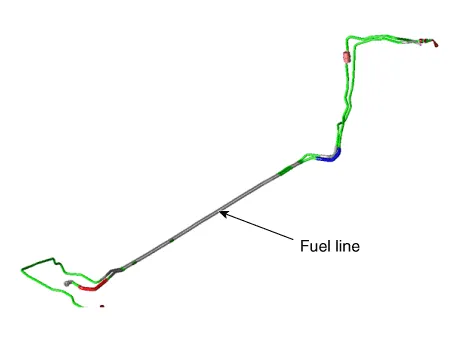
| 9. | Remove the fuel line from the bottom of the vehicle.
|
| Installation |
|
| 1. | Install in the reverse order of removal. |
Removal1.Remove the fuel pump.(Refer to Fuel Delivery System - "Fuel Pump") 2.Disconnect the fuel pump motor connector (A) and fuel sender connector (B).
Removal1.Turn the ignition seitch OFF and disconnect the battery negative (-) cable. 2.Open the fuel filler door and then remove the filler-neck installation screw (A).
Other information:
Hyundai Ioniq (AE) 2017-2022 Service & Repair Manual: Description and operation
DescriptionBlcok DiagramFunctions of Front View CameraFront View Camera supports the following functions using the information (lane, light source, vehicle and pedestrian) detected by the front view camera and the vehicle's signal information (CAN communication).
Hyundai Ioniq (AE) 2017-2022 Service & Repair Manual: Smart Cruise Control (SCC) Switch. Components and components location
C
Categories
- Manuals Home
- Hyundai Ioniq Owners Manual
- Hyundai Ioniq Service Manual
- Suspension System
- If the 12 Volt Battery is Discharged (Hybrid Vehicle)
- Hybrid Vehicle Engine Compartment
- New on site
- Most important about car

Copyright © 2026 www.hioniqae.com - 0.0203