
Hyundai Ioniq (AE): Convenient features of your vehicle / Instrument Cluster

■Hybrid vehicle • Type A
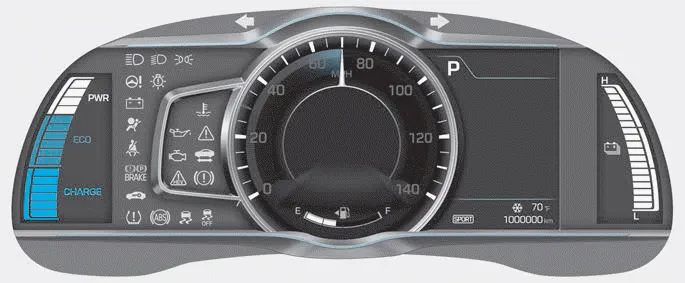
■Hybrid vehicle • Type B
1. Power gauge
2. Speedometer
3. Battery SOC (State of Charge) gauge
4. Fuel gauge
5.Warning and indicator lights
6. LCD display (including Trip computer)
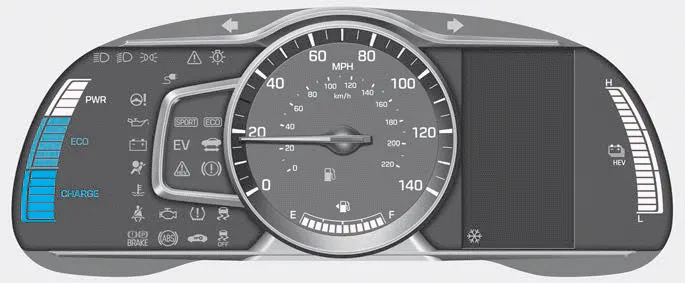
■Plug-in hybrid vehicle • Type A
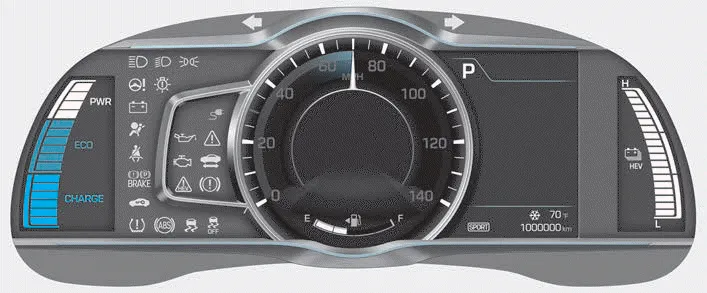
■Plug-in hybrid vehicle • Type B
1. Power gauge
2. Speedometer
3. Battery SOC (State of Charge) gauge
4. Fuel gauge
5.Warning and indicator lights
6. LCD display (including Trip computer)
1. To install the fuel tank cap, turn it clockwise until it "clicks" one time. 2. Close the fuel filler door until it is latched securely. WARNING Gasoline is highly flammable and explosive.
Instrument panel illumination When the vehicle's position lights or headlights are on, press the illumination control button to adjust the brightness of the instrument panel illumination.
Other information:
Hyundai Ioniq (AE) 2017-2022 Service & Repair Manual: Auto Defoging Actuator. Repair procedures
Inspection1.Turn the ignition switch OFF. 2.Disconnect the auto defogging connector. 3.Verify that the auto defogging actuator operates to the open position when connecting 12V to terminal 3 and grounding terminal 4. Verify that the auto defogging actuator operates to the close position when connected in reverse.
Hyundai Ioniq (AE) 2017-2022 Service & Repair Manual: Components and components location
C
Categories
- Manuals Home
- Hyundai Ioniq Owners Manual
- Hyundai Ioniq Service Manual
- Hybrid Vehicle Engine Compartment
- Jump Starting
- Troubleshooting
- New on site
- Most important about car
