
Hyundai Ioniq (AE): Cooling System / Radiator. Repair procedures
Hyundai Ioniq (AE) 2017-2022 Service & Repair Manual / Engine Mechanical System / Cooling System / Radiator. Repair procedures
| Removal and Installation |
| 1. | Loosen the drain plug, and drain the engine coolant. Remove the reservoir cap to help drain the coolant faster. (Refer to Cooling System - "Coolant") |
| 2. | Remove the cooling fan. (Refer to Cooling System - "Cooling Fan") |
| 3. | Disconnect the radiator upper hose (A) and lower hose (B).
|
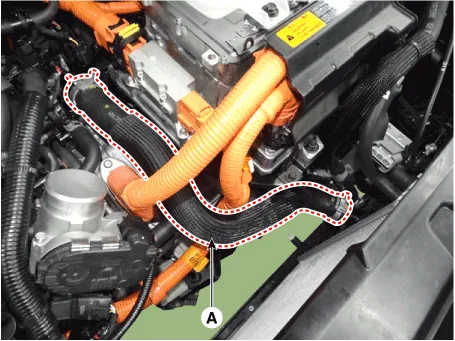
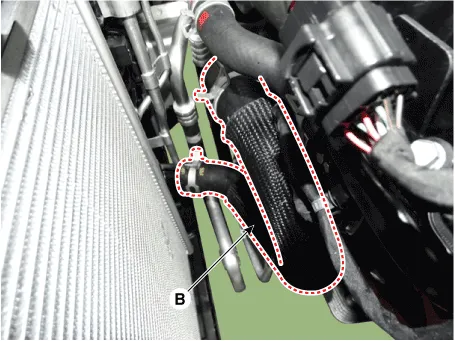

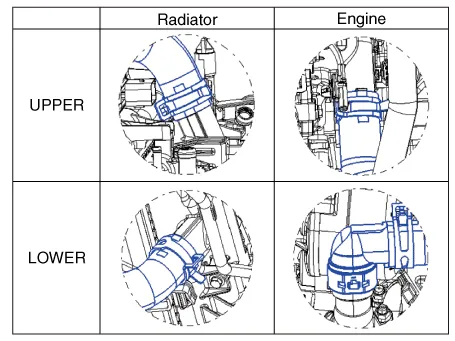
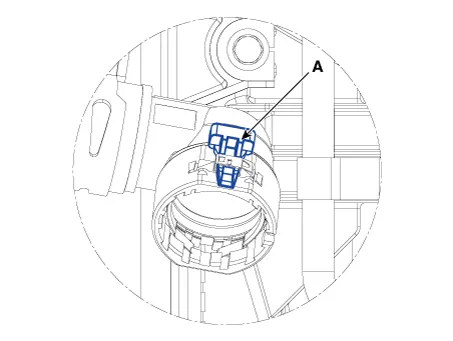
| 4. | Remove the radiator upper mounting bracket (A).
[LH]
[RH]
|
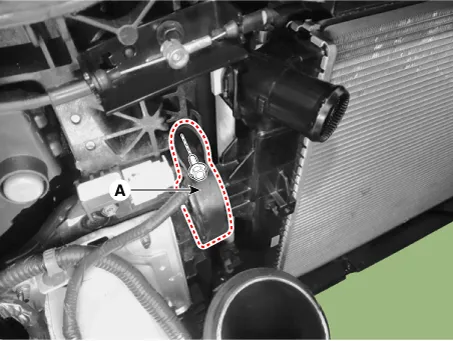
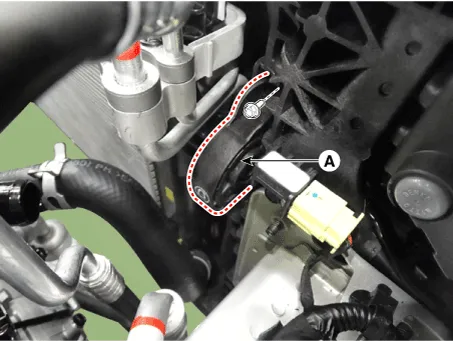
| 5. | Remove the radiator fixing bolts (A).
|
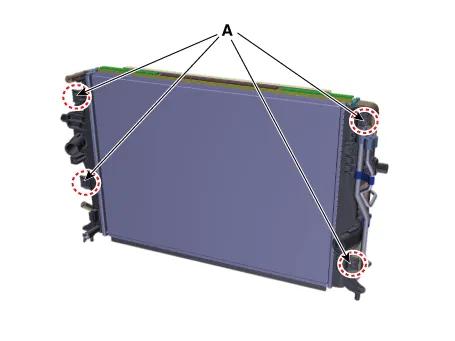
| 6. | Remove the A/C pipe fixing bolts (A).
|
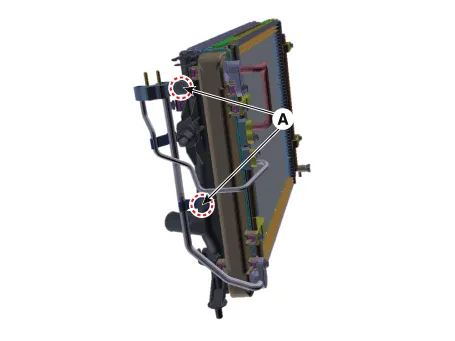
| 7. | Remove the inverter reservoir hose bracket bolts. |
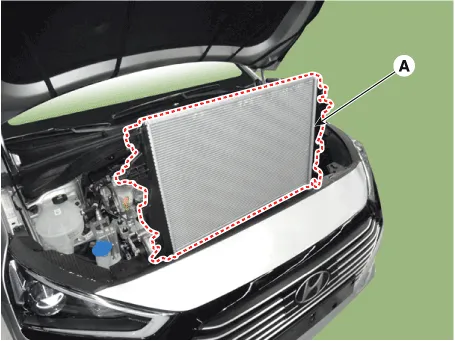
| 8. | Remove the radiator assembly (A) from the vehicle.
|
| 9. | Install in the reverse order of removal. |
| 10. | Fill the radiator with coolant and check for leaks. (Refer to Cooling System - "Coolant") |
| 11. | Start engine and check for leaks. |
| 12. | Recheck the coolant level. |
Components1. Radiator assembly2. Radiator upper mounting bracket3. Radiator lower hose4. Radiator upper hose5. Mounting insulator6. Clamp
Removal and installation1.Loosen the drain plug, and drain the engine coolant. Remove the reservoir cap to help drain the coolant faster.(Refer to Cooling System - "Coolant")2.
Other information:
Hyundai Ioniq (AE) 2017-2022 Service & Repair Manual: Components and components location
C
Hyundai Ioniq (AE) 2017-2022 Service & Repair Manual: Rear Corner Safety ON/OFF Switch. Repair procedures
Inspection1.Disconnect the negative (-) battery terminal.2.Remove the crash pad lower panel.(Refer to Body - "Crash Pad Lower Panel")3.Remove the lower crash pad switch assembly (A) after disengaging the mounting clip.4.Remove the rheostat switch connector (A).
Categories
- Manuals Home
- Hyundai Ioniq Owners Manual
- Hyundai Ioniq Service Manual
- Hybrid Control System
- DCT(Dual Clutch Transmission) System
- Transmission Gear Oil. Repair procedures
- New on site
- Most important about car

Copyright © 2026 www.hioniqae.com - 0.0177