
Hyundai Ioniq (AE): Cooling System / Reservoir Tank. Repair procedures
| Removal and installation |
| 1. | Loosen the drain plug, and drain the engine coolant. Remove the reservoir cap to help drain the coolant faster. (Refer to Cooling System - "Coolant") |
| 2. | Remove the reservoir tank.
|
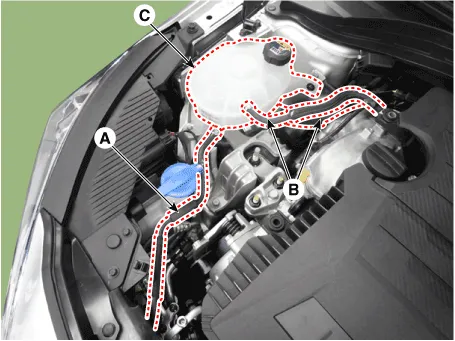

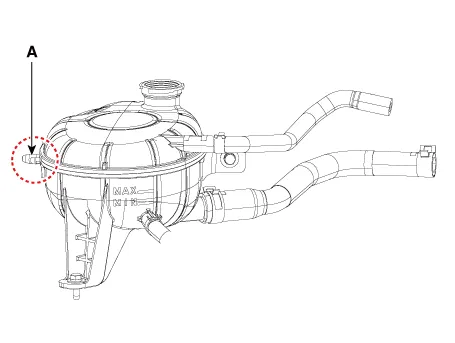
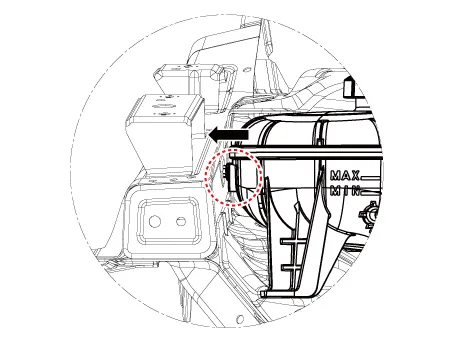
Removal and Installation1.Loosen the drain plug, and drain the engine coolant. Remove the reservoir cap to help drain the coolant faster.(Refer to Cooling System - "Coolant")2.
Components1. Water temperature control (WTC) outlet fitting2. Water temperature control (WTC) housing3. Water temperature control (WTC) gasket4. Water temperature control (WTC) outlet fitting gasket5.
Other information:
Hyundai Ioniq (AE) 2017-2022 Service & Repair Manual: Evaporator Temperature Sensor. Repair procedures
Inspection1.Turn the ignition switch OFF.2.Disconnect the evaporator temperature sensor connector.3.Measure the resistance between terminal "+" and "-" of the evaporator temperature sensor.Specification Evaporator core temperature [°C (°F)] Resistance [KΩ]
Hyundai Ioniq (AE) 2017-2022 Service & Repair Manual: Ambient Temperature Sensor. Repair procedures
Inspection1.Check the resistance of the ambient temperature sensor between terminals 1 and 2 whether it changes by changing the ambient temperature.1. Ambient Sensor (+)2. Sensor groundSpecification Ambient temperature [°C (°F)] Resistance between terminal 1 and 2 (
Categories
- Manuals Home
- Hyundai Ioniq Owners Manual
- Hyundai Ioniq Service Manual
- DCT(Dual Clutch Transmission) System
- Components and components location
- Repair procedures
- New on site
- Most important about car
