
Hyundai Ioniq (AE): AHB(Active Hydraulic Boost) System / Hydraulic Power Unit. Repair procedures
Hyundai Ioniq (AE) 2017-2022 Service & Repair Manual / Brake System / AHB(Active Hydraulic Boost) System / Hydraulic Power Unit. Repair procedures
| Removal |
| 1. | Turn ignition switch OFF and disconnect the negative (-) battery cable. |
| 2. | Remove the wiring bracket.
|
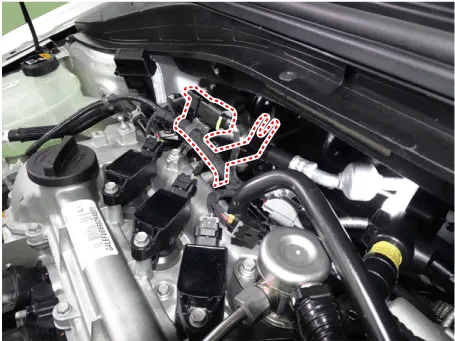
| 3. | Remove the brake fluid from the reservoir with a syringe.
|

| 4. | Loosening the flare nut (A) and then disconnect the brake tube.
|
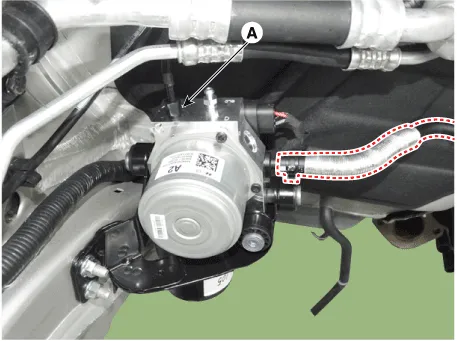

| 5. | Disconnect the PSU connector.
|
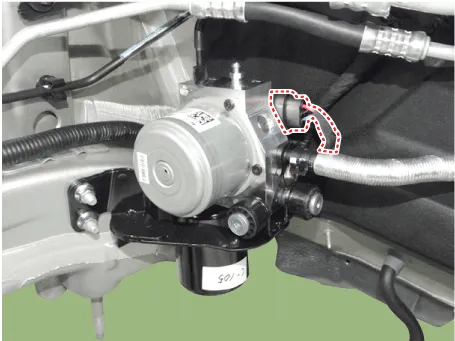
| 6. | Remove the front sub frame. (Refer to Suspension System - "Sub Frame") |
| 7. | Loosen the mounting bolt and nut then remove the PSU.
|
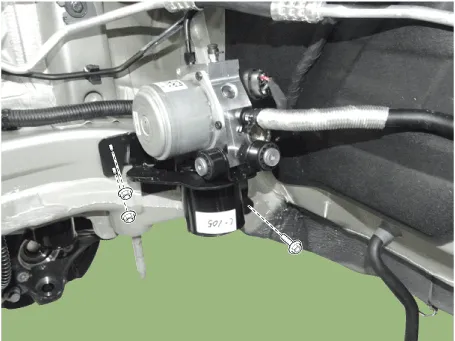
| Installation |
| 1. | Installation is the reverse of removal. |
| 2. | Tighten the PSU bracket bolts and brake tube to the specified torque. |
| 3. | After filling the brake fluid in the reservoir, perform the air bleed. . (Refer to AHB System - "AHB System Air Bleeding") |
| 4. | Conduct Pressure sensor Calibration. |
| 5. | Check the brake pedal operation. |
| Diagnostic Procedure Using GDS |
The following section describes how to diagnose faults using a diagnostic instrument.
| 1. | Connect the diagnostic instrument to the self-diagnostic connector (16-pin) beneath the crash pad on the side of driver's seat, and then turn on the ignition to activate the diagnostic instrument. |
| 2. | In the GDS Vehicle Type Selection menu, select "Vehicle Type" and "ABS/ESC" System, and then opt for "OK." [Pressure Sensor Calibration]
|
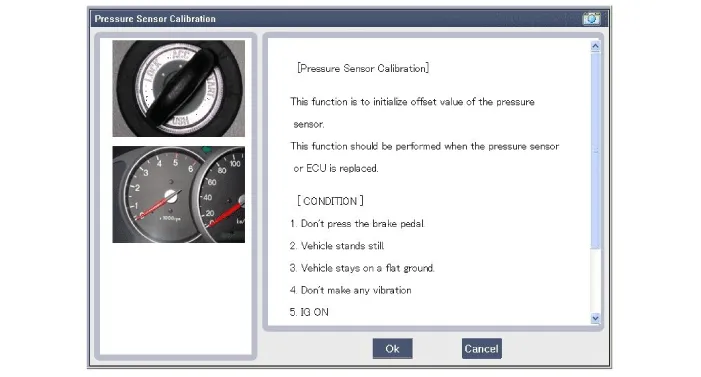
| 3. | Turn ignition switch off and on after calibration procedure. |
| 4. | Confirm success of calibration. |
Components • PSU (Presser Source Unit) must not be disassembled.1. Pressure Source Unit (PSU)2. Pressure Source Unit (PSU) connector3.
Other information:
Hyundai Ioniq (AE) 2017-2022 Service & Repair Manual: Description and operation
DescriptionThe smart cruise control system allows a driver to program the vehicle to control the speed and following distance by detecting the vehicle ahead without depressing the brake pedal and the accelerator pedal.1.Cruise speed control : The vehicle maintains the selected speed if there are not vehicles ahead.
Hyundai Ioniq (AE) 2017-2022 Service & Repair Manual: Rear Corner Safety ON/OFF Switch. Repair procedures
Inspection1.Disconnect the negative (-) battery terminal.2.Remove the crash pad lower panel.(Refer to Body - "Crash Pad Lower Panel")3.Remove the lower crash pad switch assembly (A) after disengaging the mounting clip.4.Remove the rheostat switch connector (A).
Categories
- Manuals Home
- Hyundai Ioniq Owners Manual
- Hyundai Ioniq Service Manual
- Repair procedures
- Troubleshooting
- Front Disc Brake. Repair procedures
- New on site
- Most important about car

Copyright © 2026 www.hioniqae.com - 0.0137