
Hyundai Ioniq (AE): Seat Electrical / Seat Heater. Repair procedures
Hyundai Ioniq (AE) 2017-2022 Service & Repair Manual / Body Electrical System / Seat Electrical / Seat Heater. Repair procedures
| Inspection |
Front Seat Heater
| 1. | Check for continuity and measure the resistance between terminals No 3 and No 6.
|

| 2. | Operate the seat heater after connecting the connector, and then check the thermostat by measuring the temperature of seat surface.
|
Rear Seat Heater
| 1. | Check for continuity and measure the resistance between terminals No 1 and No 4.
|
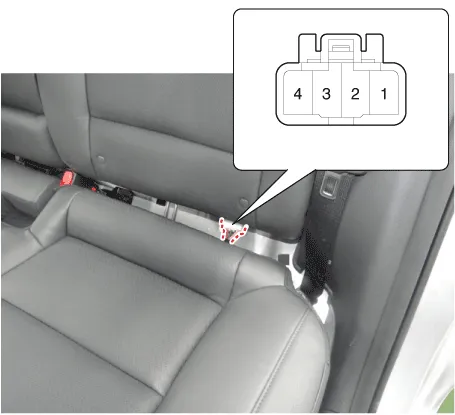
| 2. | Operate the seat heater after connecting the connector, and then check the thermostat by measuring the temperature of seat surface.
|
Seat Heater Unit Diagnosis Mode
| 1. | You can enter the diagnosis mode by turning the seat heater button on. |
| 2. | You can enter the diagnosis mode by referring to following description.
|
| 3. | After entering the diagnosis mode, you can check what failed by checking the blinking LED. [Driver / Passenger Seat Heater]
[Rear Seat Heater]
|
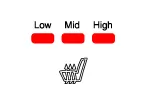
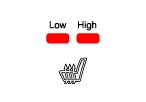
| 4. | You can check the malfunctioning by checking the blinking LED. |
| 5. | Pressing the IGN OFF button will end the diagnosis mode for the heater seat. |
| 6. | You can check whether the heating seat system works properly after turning the IGN ON. If you want to check the error code, you can refer to the procedure of 2 above. |
Circuit Diagram[Front Seat Heater (Non-Air Ventilation)][Rear Seat Heater (Bench Type)]
Components[Front Seat]1. Driver seater heater switch2. Passenger seater heater switch[Rear Seat]1. Seat heater switch
Other information:
Hyundai Ioniq (AE) 2017-2022 Service & Repair Manual: Auto Defoging Actuator. Specifications
S
Hyundai Ioniq (AE) 2017-2022 Service & Repair Manual: Repair procedures
Replacement1.Remove the battery (-) terminal.2.Remove the engine room under cover.(Refer to Engine Mechanical System - "Engine Room Under Cover")3.Remove the heater hose (A) and AEWP hose (B).4.Disconnect the lock pin to remove the heater hose pump connector (A).
Categories
- Manuals Home
- Hyundai Ioniq Owners Manual
- Hyundai Ioniq Service Manual
- Front Disc Brake. Repair procedures
- Hybrid Control System
- Description and operation
- New on site
- Most important about car

Copyright © 2026 www.hioniqae.com - 0.0145