
Hyundai Ioniq (AE): Exhaust Emission Control System / Catalytic Converter. Description and operation
| Description |
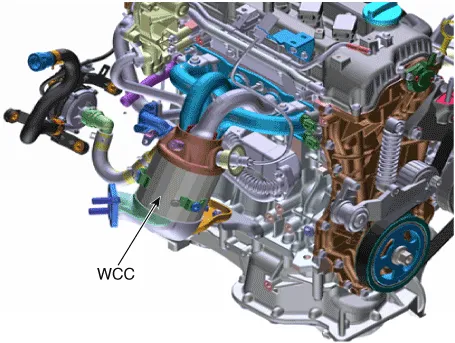
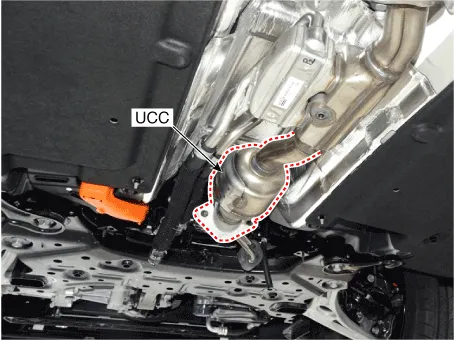
DescriptionExhaust emissions (CO, HC, NOx) are controlled by a combination of engine modifications and the addition of special control components.Modifications to the combustion chamber, intake manifold, camshaft and ignition system form the basic control system.
DescriptionContinuous Variable Valve Timing (CVVT) system advances or retards the valve timing of the intake and exhaust valve in accordance with the ECM control signal which is calculated by the engine speed and load.
Other information:
Hyundai Ioniq (AE) 2017-2022 Service & Repair Manual: Photo Sensor. Description and operation
Description The photo sensor is located at the center of the defrost nozzles.The photo sensor contains a photovoltaic (sensitive to sunlight) diode. The solar radiation received by its light receiving portion, generates an electromotive force in proportion to the amount of radiation received which is transferred to the automatic temperature control
Hyundai Ioniq (AE) 2017-2022 Service & Repair Manual: Duct Sensor. Components and components location
C
Categories
- Manuals Home
- Hyundai Ioniq Owners Manual
- Hyundai Ioniq Service Manual
- Repair procedures
- DCT(Dual Clutch Transmission) System
- Suspension System
- New on site
- Most important about car
