
Hyundai Ioniq (AE): Brake System / Brake Line. Repair procedures
Hyundai Ioniq (AE) 2017-2022 Service & Repair Manual / Brake System / Brake System / Brake Line. Repair procedures
| Removal |
| 1. | Disconnect the brake fluid level switch connector, and remove the reservoir cap. |
| 2. | Remove the brake fluid from the master cylinder reservoir with a syringe.
|

| 3. | Remove the wheel & tire. |
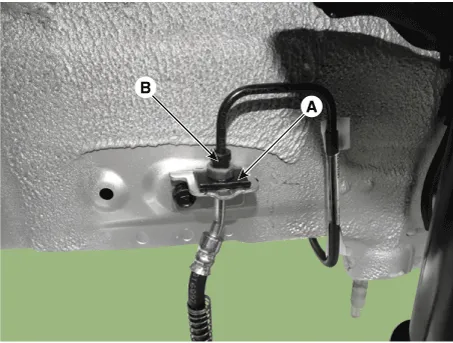
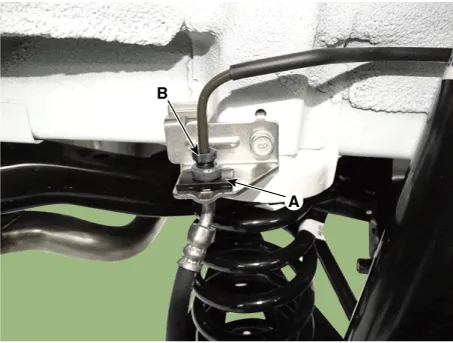
| 4. | Remove the brake hose clip (A). |
| 5. | Disconnect the brake tube by loosening the tube flare nut (B).
[Front]
[Rear]
|
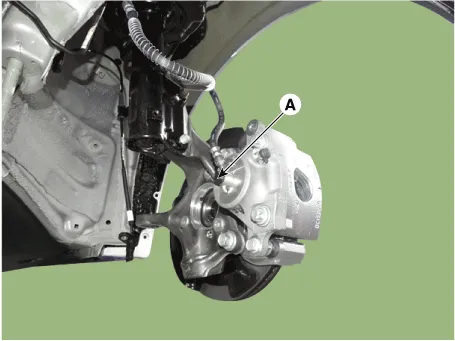
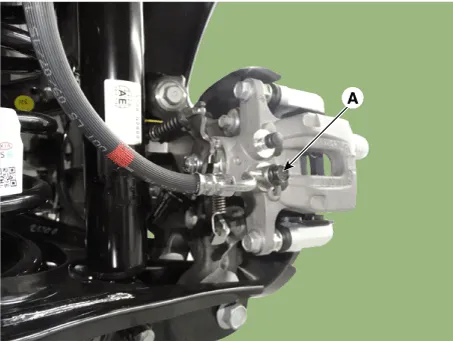
| 6. | Disconnect the brake hose from the brake caliper by loosening the bolt (A).
[Front]
[Rear]
|
| Installation |
| 1. | To install, reverse the removal procedure.
|
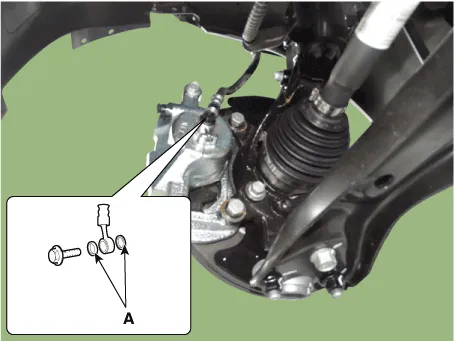
| 2. | After installing, bleed the brake system. (Refer to Brake System - "Brake System Bleeding") |
| 3. | Check the spilled brake oil. |
Components 1. Brake pedal member assembly2. Stop lamp switch3. Brake pedal arm4. Brake pedal pad5. Brake pedal stroke sensor
Other information:
Hyundai Ioniq (AE) 2017-2022 Service & Repair Manual: Heater Unit. Components and components location
Component Location1. Heater unit assemblyCompoents1. Heater core cover2. Heater core & Seal assembly3. Mode actuator [LH]4. Temperature control actuator [LH]5. Shower duct [LH]6. Duct sensor [Floor]7. PTC Heater8. Duct sensor [Vent]9. Heater & Evaporator lower case10.
Hyundai Ioniq (AE) 2017-2022 Service & Repair Manual: Description and operation
DescriptionThe smart cruise control system allows a driver to program the vehicle to control the speed and following distance by detecting the vehicle ahead without depressing the brake pedal and the accelerator pedal.1.Cruise speed control : The vehicle maintains the selected speed if there are not vehicles ahead.
Categories
- Manuals Home
- Hyundai Ioniq Owners Manual
- Hyundai Ioniq Service Manual
- Repair procedures
- Jump Starting
- Engine Mechanical System
- New on site
- Most important about car

Copyright © 2026 www.hioniqae.com - 0.0201